


Building Apartment Websites for Modern Search
LeaseLeads uses structured data to connect key property details, including floor plans, availability, pricing, FAQs and application links, giving search systems clearer context about each community.

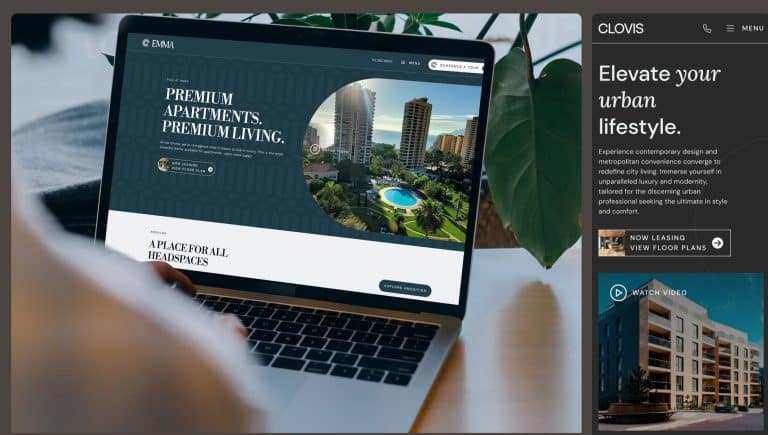
The Way Modern Renters Find Their Next Home is Evolving.
Apartment search has a new roommate: AI. J Turner Research’s latest Internet Adventure Study found that 45.9% of renters use AI to research apartments. And 5.7% started their most recent search with an AI tool before visiting a listing site or Google.
Google hasn’t been evicted. Renters still search across listing sites, search engines and property websites. But the journey is getting more conversational: someone can ask for a home that fits their budget, location and lease needs, then use technology to sort through the options.
That puts a new job in front of property websites: make the details clear to people and to the systems helping them search. LeaseLeads uses structured data to connect a community with its floor plans, available apartments, lease terms, prices and application links. Think of it as a well-labeled map of the leasing details, with the connections made clear.
From “two bedrooms” to a specific leasing option
On a typical property website, a visitor might see a plan called B5 with two bedrooms, two bathrooms and 1,635 square feet. The site may also show that apartment 2205 is available, with a 12-month offer at $4,424 per month and a link to apply.
LeaseLeads’ structured data can describe those relationships: apartment 2205 belongs to floor plan B5; the offer is for that apartment; the price applies to a 12-month lease; and the application action points to the relevant destination.
That kind of detail matters because renters are not searching for abstract data. They want to compare real options and move forward. The more clearly a website describes its plans, units, prices and next steps, the easier it is for software that processes structured data to interpret what the property offers.
A sample like this is an illustration of the connections the markup can represent, not a live quote. Actual pricing and availability depend on the property’s leasing data and how often that information updates.
A connected picture of the community
The property itself is part of the story, too. LeaseLeads’ implementation can describe a community and connect it with its floor plans and available apartments. Where the site has the data, it can also identify amenities, nearby places, addresses, map links, coordinates and application destinations.
The same approach extends to supporting content. FAQs can pair a question with its answer. Reviews can be associated with the community. Photos, videos and virtual tours can carry descriptive information. Articles can identify details such as their headline, publication date and author.
This creates a richer, more organized description of a property website than a collection of disconnected page text. Shared identifiers help indicate when different parts of the site refer to the same community, page, review, photo or place. In plain English: the website can say not only “here is a pool,” but also “this amenity belongs to this community.”
More than one layer working together
The structured data comes from several parts of the LeaseLeads stack. The LeaseLeads plugin describes the community, leasing inventory, floor plans, apartments, offers and application actions. Yoast describes the organization, website and pages, including breadcrumbs and article information. The site theme adds information about the content visitors see, such as FAQs, location listings, galleries, reviews, articles and media.
Those layers connect through shared identifiers. For example, theme markup can attach to the same page identified by Yoast, while reviews can connect to the property record. The goal is a coherent set of related records rather than a pile of labels competing for attention.
The markup is generated from existing leasing data, theme modules and Yoast settings. What appears on an individual site depends on which data and modules are configured there. As of the implementation briefing dated October 23, LeaseLeads’ plugin and Yoast schema were live across the portfolio; theme schema had been completed for the Alma and Aspen themes, with the remaining four scheduled for rollout.
A stronger foundation, not a magic ranking button
Structured data gives search systems a clearer way to interpret information. It does not guarantee higher rankings, a special search result, an AI citation or a new lead. Search engines and AI services choose what they retrieve and how they use it, and those choices vary.
That distinction matters. A website can publish detailed, well-connected markup and still have no control over whether a particular assistant reads it, quotes it or sends someone to the site. Markup coverage is a technical foundation, not proof of an outcome.
Our focus is on making property information more explicit and connected: from community details to individual apartments, lease-term pricing and the action a renter can take next. That gives systems that consume structured data a better-organized source to work with, while helping keep the leasing experience clear for people, too.
Because the best search experience is still the one that helps someone find a home, understand the options and know what to do next.